Corbin Rayfield, MD
Dr. Rayfield is a cardiac electrophysiologist serving Scottsdale and Phoenix. He treats heart rhythm disorders — atrial fibrillation, SVT, and ventricular arrhythmias — with catheter ablation and cardiac device therapy.
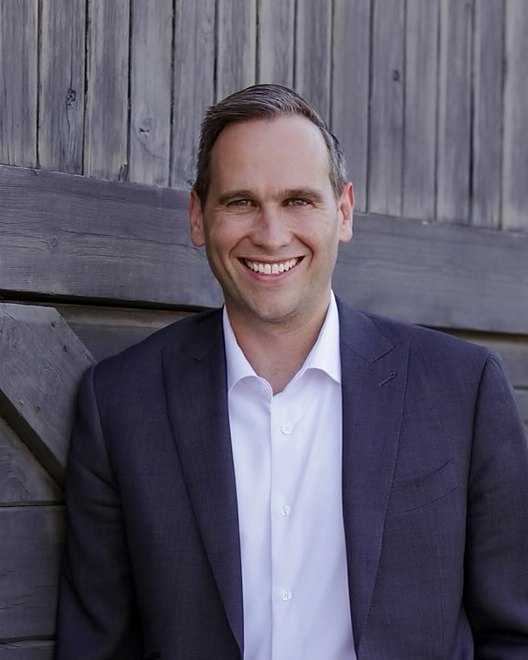
Corbin Rayfield, MDCardiac Electrophysiology
About me
I trained in internal medicine and cardiovascular disease at Mayo Clinic in Arizona, where I served as chief cardiology fellow, then completed subspecialty training in clinical cardiac electrophysiology at the University of Chicago. I practiced cardiology in Scottsdale before returning for electrophysiology training, and I now see patients with heart rhythm disorders in the same community.
I take care of patients with abnormal heart rhythms and patients living with pacemakers and defibrillators. Much of that work is atrial fibrillation, which I treat with pulsed field and radiofrequency ablation. My electrophysiology training at the University of Chicago concentrated on pulsed field ablation, conduction system pacing, and leadless and modular pacing systems. Pulsed field ablation was a routine part of that program, and I performed more than 250 of these cases during fellowship.
Choosing between ablation and medication is a nuanced, individual decision. When there is a lot to weigh, I walk through the options with you until we land on the one that fits your situation.
I don't consider a visit finished until you understand the “why” behind your treatment plan.
During medical school I spent a year as a research fellow in mathematical oncology at Mayo Clinic, building machine-learning models that predicted treatment response and survival in brain tumor patients. It has nothing to do with heart rhythms, but the habit it built — asking what the data will actually support before acting on it — is the same one I use deciding whether someone needs an ablation.
Away from the lab, I live in Phoenix with my wife, our two children, and two dogs.
I am certified by the American Board of Internal Medicine in Internal Medicine and in Cardiovascular Disease, and by the National Board of Echocardiography in Adult Comprehensive Echocardiography.
- Medical SchoolUniversity of Illinois at Chicago — 2016
- ResidencyInternal Medicine — Mayo Clinic, Arizona — 2020
- FellowshipCardiovascular Disease — Mayo Clinic, Arizona — 2023
- FellowshipClinical Cardiac Electrophysiology — University of Chicago — 2026
- Board CertificationAmerican Board of Internal Medicine — Internal Medicine; Cardiovascular Disease
- Board CertificationNational Board of Echocardiography — Adult Comprehensive Echocardiography
- Hospital AffiliationsHonorHealth Scottsdale Osborn, Scottsdale Shea, and Deer Valley medical centers
- Arizona License54824
- NPI1235585167
Selected publications
- Subcutaneous implantable cardioverter-defibrillator system malfunction during pelvic radiation therapy: recognition and management of a rare complication Rayfield C, Beaser AD, Ozcan C. HeartRhythm Case Reports, 2026;12(7):749–751. doi:10.1016/j.hrcr.2026.04.003
- Approach to atrial pacing in an extracardiac Fontan patient Joshee SR, Rayfield C, Yeshwant S, et al. JACC: Clinical Electrophysiology, 2025;11(12):2819–2823. doi:10.1016/j.jacep.2025.08.022
- Machine learning approaches for phenotyping in cardiogenic shock and critical illness Jentzer JC, Rayfield C, Soussi S, et al. JACC: Advances, 2022;1(4):100126. doi:10.1016/j.jacadv.2022.100126
- Machine learning on high-dimensional data to predict bleeding post percutaneous coronary intervention Rayfield C, Agasthi P, Mookadam F, et al. Journal of Invasive Cardiology, 2020;32(5):E122–E129. doi:10.25270/jic/19.00429
- Distinct phenotypic clusters of glioblastoma growth and response kinetics predict survival Rayfield C, Grady F, De Leon G, et al. JCO Clinical Cancer Informatics, 2018;2:1–14. doi:10.1200/cci.17.00080
Conditions & procedures
Electrophysiology is the subspecialty of cardiology concerned with the heart's electrical system — the rhythms that make the heart beat too fast, too slow, or irregularly.
Atrial fibrillation & flutter
Rate and rhythm control, anticoagulation and stroke-risk management, cardioversion, and ablation.
Catheter ablation
Minimally invasive procedures that treat the source of an abnormal rhythm, including radiofrequency and pulsed field ablation.
SVT and other fast rhythms
Supraventricular tachycardia, AV nodal reentrant tachycardia, and accessory pathways such as Wolff-Parkinson-White.
Ventricular arrhythmias
Premature ventricular contractions and ventricular tachycardia, including in patients with prior heart attack or cardiomyopathy.
Pacemakers & defibrillators
Implantation and long-term management of pacemakers, ICDs, and cardiac resynchronization devices, including conduction system pacing, leadless and modular systems, and remote monitoring.
Palpitations, syncope & slow heart rates
Evaluation of unexplained fainting, skipped beats, and bradycardia, using ambulatory monitoring and implantable loop recorders.
What to expect
At our first visit we’ll go over the history that led you to my office. Bring anything you think might be relevant about your heart.
I’ll be most curious about times you’ve felt lightheaded, winded, or passed out — so in the weeks before you come, pay attention to your energy levels. If you have data from a wearable like an Apple Watch or Fitbit, bring it and I’ll review it with you.
Most patients will also have an EKG, which I’ll review and discuss with you.
Worth bringing
- A list of your current medications, with doses
- Any prior EKGs, monitor reports, or echocardiograms
- Your device card, if you have a pacemaker or defibrillator
- Wearable data — Apple Watch, Fitbit, or similar
- Notes on when symptoms happen and what you were doing
For referring physicians
Access. I hold slots for urgent referrals. A patient with newly symptomatic atrial fibrillation, unexplained syncope, or a device problem is seen within 48 hours.
What to send. Whatever you have — a recent ECG, ambulatory monitor data, the most recent echocardiogram, device interrogations, and the anticoagulation history. Fax it ahead and the visit is more useful to both of us.
Requesting a consult. Email me at referrals@rayfieldmd.com and I will see the patient within 48 hours, Monday through Friday. Messages come to me directly rather than to a call center. Please send records by fax to 480-718-5074 rather than by email.
After the visit. You will have my note the day of the visit. Patients return to you for their ongoing cardiac care — I am managing the rhythm problem, not taking over the relationship.
- Urgent referralsSeen within 48 hours, Mon–Fri
- Referral phone480-718-5072
- Fax records to480-718-5074
- Consult requestsreferrals@rayfieldmd.com
- Ablation experience250+ pulsed field ablations
Office & contact
Please call the office to schedule an appointment. Do not send medical information by email — email is not a secure channel, and I do not monitor this address continuously.
-
Office
Atria Heart in collaboration with HonorHealth — South Scottsdale
7373 N. Scottsdale Rd., Ste. B120
Scottsdale, AZ 85253 - Phone480-718-5072
- Fax480-718-5074
- Emailwork@rayfieldmd.com
- Directions Open in Google Maps →
Office hours
- Monday – Friday8:00 a.m. – 5:00 p.m.
- Saturday – SundayClosed